
3D printing for prototypes, exhibits and replicas
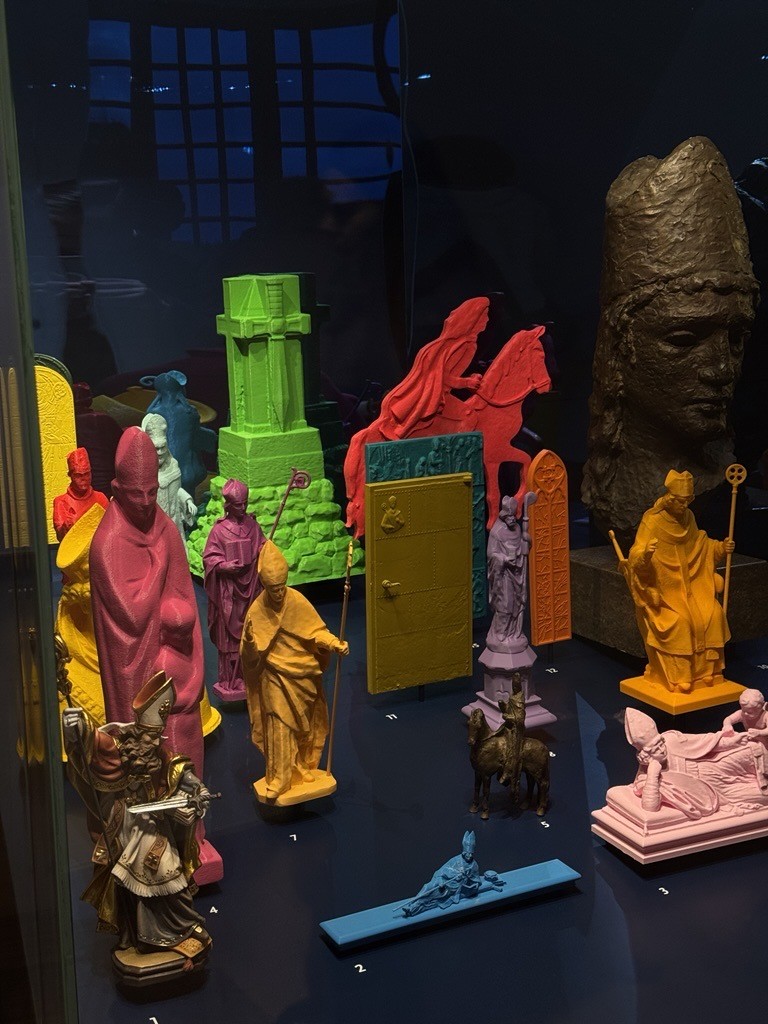
EXCIT3D produces prototypes, components, exhibits and replicas by 3D printing, with FDM, SLA and SLS. We create the print data in-house from CAD data, scans or our own 3D models, most recently, for example, the castle models and Count Engelbert sculptures for the permanent exhibition at Schloss Burg.
Manufacturing processes at a glance
The differences between conventional manufacturing and 3D printing.
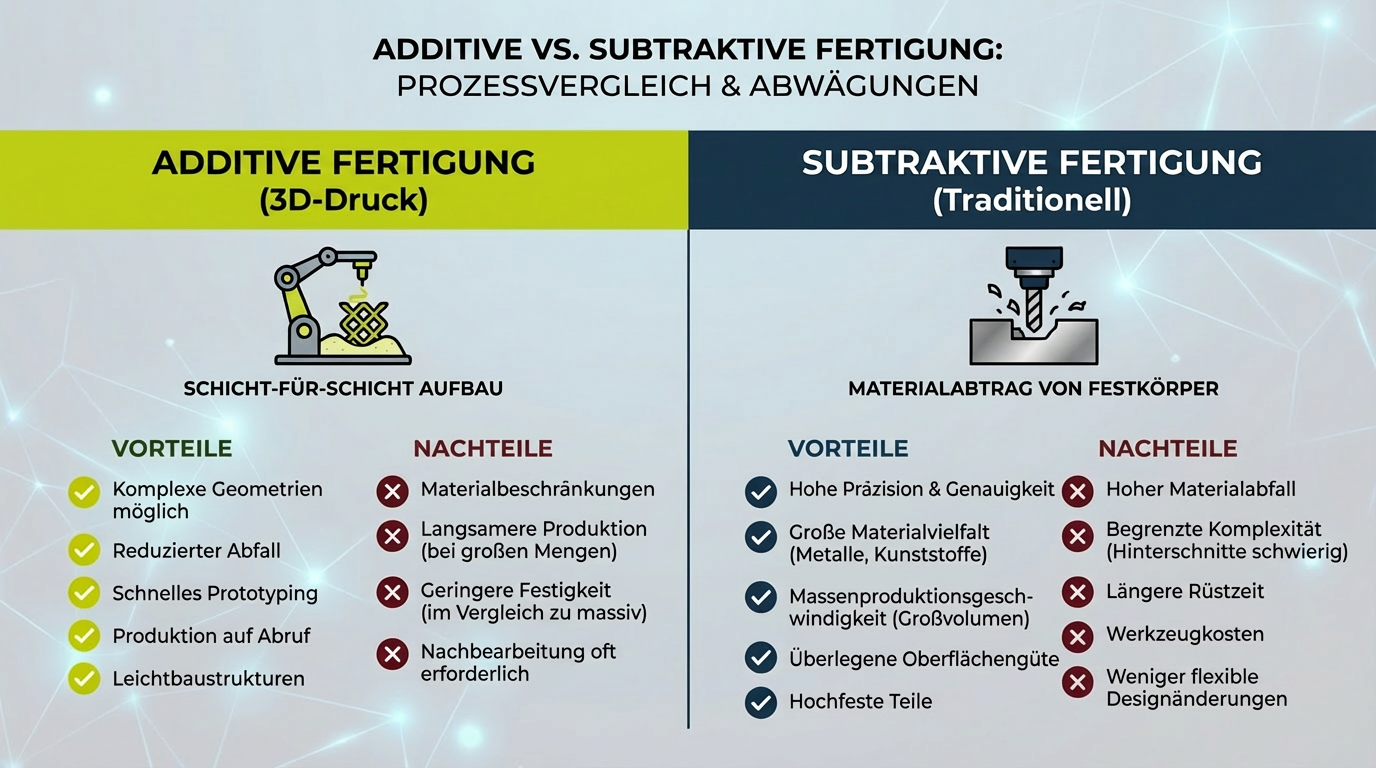
The part is produced from raw material by mechanical removal through milling, broaching, turning and drilling.
Material is removedThe part is shaped by applying mechanical or thermal forces such as bending, pressing and casting.
Material is reshapedThe part is built up layer by layer by adding, applying & depositing material based on a digital model.
Material is addedWhat is additive manufacturing?
Additive manufacturing, better known as 3D printing, is a production process in which three-dimensional objects are built up layer by layer from a digital model under computer control.
Unlike conventional subtractive processes, in which material is removed, 3D printing makes it possible to produce highly complex geometries and resource-saving lightweight structures.
The process is suitable for prototypes, one-offs and small series for which a tool or a mold is not worthwhile.

Our technologies
Which process fits depends on material, surface, strength and quantity.
| Technology | Process | Materials | Main advantages | Applications |
|---|---|---|---|---|
| FDMFused deposition modeling | Thermoplastic filament is melted and applied layer by layer | PLA, ABS, PETG, nylon, TPU | • Cost-effective • Fast • Ideal for first functional samples |
Rapid prototyping, jigs and fixtures, simple spare parts |
| SLAStereolithography | A UV laser cures liquid resin layer by layer | Standard resins, engineering resins (heat-resistant, flexible) | • Very high level of detail • Smooth surfaces • Complex designs |
Design prototypes, molds, dentistry, jewelry |
| SLSSelective laser sintering | A high-power laser fuses fine plastic powder layer by layer | Polyamide (PA12), TPU (flexible) | • Robust parts • No support structures • High design freedom |
Functional prototypes, small series, mechanical parts |

FDM – fused deposition modeling
The proven process for fast prototypes and functional parts. Ideal for first concept models and for jigs and fixtures.
Fast • Cost-effective
SLA – stereolithography
Highest level of detail and smooth surfaces. Well suited for design prototypes, molds and demanding visual models.
Precise • Highly detailed
SLS – selective laser sintering
Robust, functional parts without support structures. The technology for demanding mechanical applications and small series.
Robust • FlexibleWhy additive manufacturing?
Compared with conventional, subtractive manufacturing processes, additive manufacturing offers key advantages:
- Complex geometries and undercuts can be produced without tooling
- Material consumption is significantly lower
- The production time from idea to prototype is considerably shorter
- Individual adjustments are possible at any time
While subtractive processes remove material and thus create waste, 3D printing only builds what is actually needed, layer by layer.
Applications
What we use 3D printing for.
Industry & prototyping
We produce functional samples and design prototypes on which shape, fit and handling can be tested early on.
- Functional prototypes for product tests
- Spare parts and custom-made parts
- Jigs, fixtures and tools (rapid tooling)
- Small series and mass customization

Art & culture
For the cultural sector, we create detailed replicas of historical artifacts or restore damaged works of art. Projects such as the 3D prints for the permanent exhibition at Schloss Burg show how digital reconstruction and additive manufacturing help preserve cultural heritage.
- Digital reconstruction of historical objects
- Replicas for museum exhibitions
- Accessible exhibits to touch
- Restoration of damaged works of art

Custom solutions
These include parts for mechanical engineering, architectural models and large formats such as the 2.75-meter Liewerfrau.
Get in touch with us to realize your individual project. We check your data and suggest a process and material.
Your benefits with EXCIT3D
What we take care of in 3D printing projects.
Reference projects
Discover how EXCIT3D uses additive manufacturing in various industries.


More projects
Selected projects and products in this area, each with its own page.


Start your project with us
Send us your file or describe the object. We will get back to you with process, material and effort.