
Zeitsprung – Digital Time Travel from a 2D Start to Mixed Reality
Whether as a simple 2D visualization on a smartphone or as a mixed reality time travel experience with a headset: with ZEITSPRUNG, history can be experienced directly on site or digitally. The offers are modular and can be expanded from a first entry point to an extensive tour.
Experiencing history together
Multi-user functions enable shared experiences: several people wearing mixed reality headsets experience the same VR scene in sync or look together at an animated 3D model placed in the real space, each from their own perspective.
The example shows Anne of Cleves, who set out from Schloss Burg near Solingen to become Queen of England at the side of Henry VIII. How a group with centrally controlled headsets is guided through a time travel experience is described on the page Virtual time travel with mixed reality.

Storytelling, using Goslar Cathedral as an example
Storytelling and an experience-oriented approach are also central when conveying historical contexts. For DOM:digital in Goslar, we reconstructed and brought to life the cathedral, of which only the entrance hall survives today.
For younger visitors, the bat Lunar appears as a narrating avatar. In all projects, we plan with a low entry barrier, modularly and with future expansions in mind.
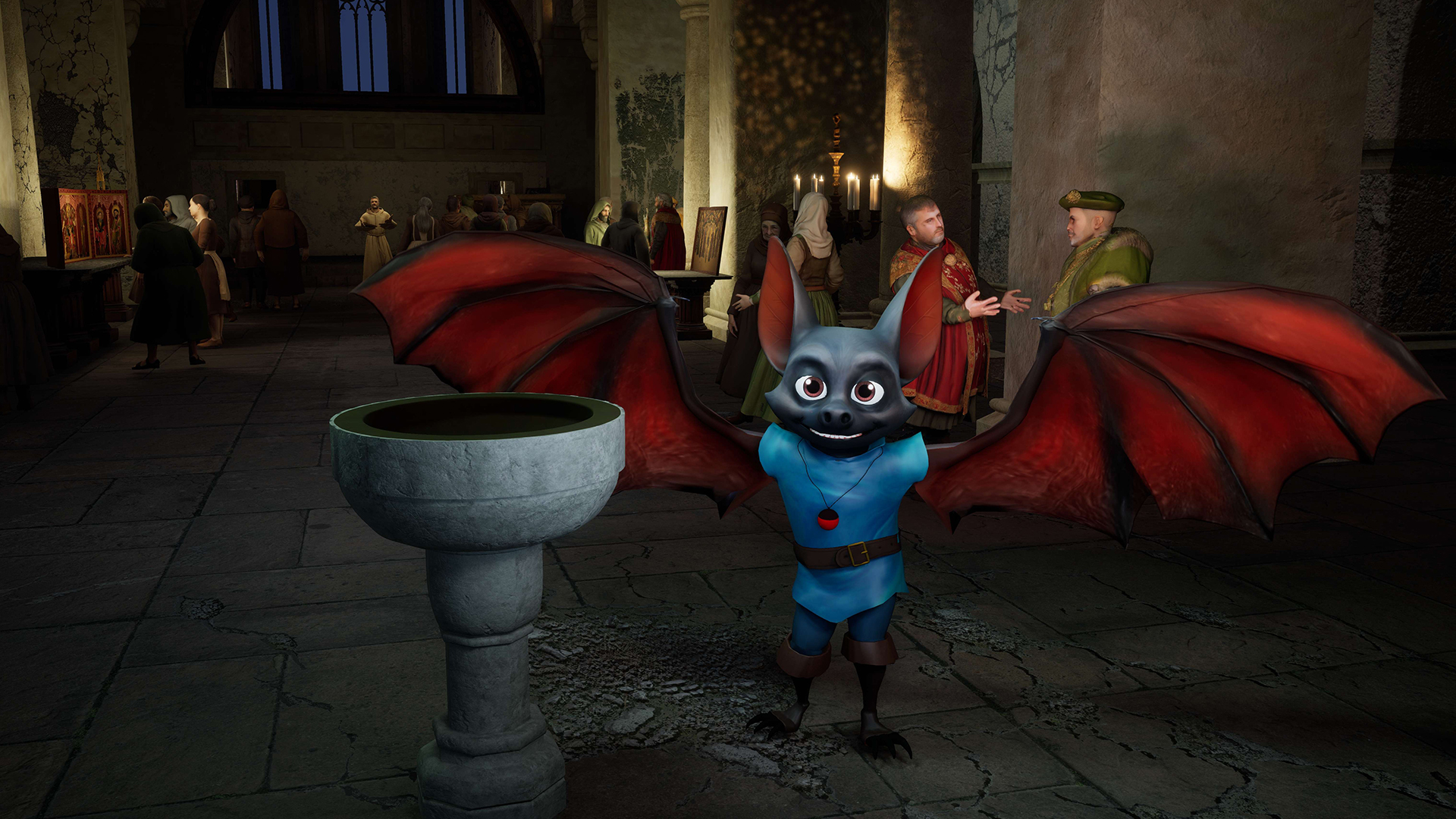
The Zeitsprung offers at a glance
Two levels: low-threshold entry offers and extended experiences with mixed reality.
A. Low-threshold entry offers
A1. Zeitsprung – 2D on site
The simplest entry into Zeitsprung: visitors stand in front of a monument, a building or at a historical site and see on their smartphone how a historical person or scene comes to life.
Historical protagonists can appear realistically or as comic figures, show up at different places in the city in their historical context and tell of the past. There are hardly any limits to the design.

A2. Zeitsprung – augmented reality with three stations
Augmented reality (AR) extends the real world with virtual elements in real time. 3D models, images or information are overlaid directly onto the surroundings via smartphones, tablets or smart glasses; unlike virtual reality, the physical surroundings remain visible.
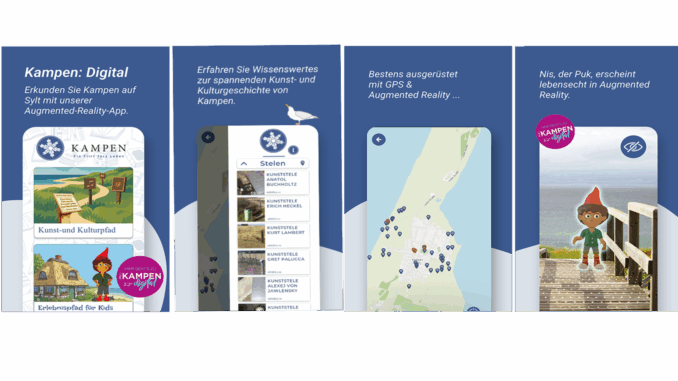
An example: GPS-based, a realistic avatar appears in front of a monument and holds up a parchment on which a historical video is playing. This creates storytelling that does not overwhelm anyone technically. In our AR app for Kampen on Sylt, the Sylt Puk accompanies the children.
Included in the AR entry:
- GPS-based unlocking of the stations
- Historical avatar as narrator
- 2D images of the past
- 2D images of future projects
- Optional: audio, subtitles and accessibility
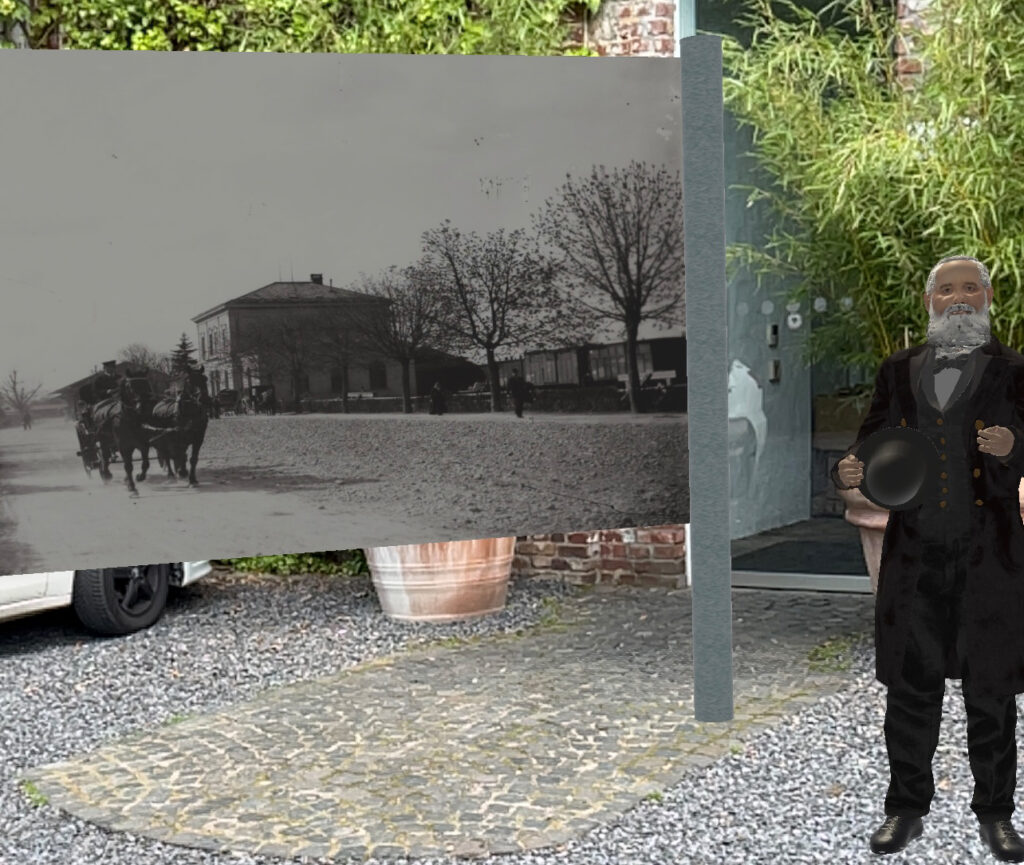
Example Zug: Alfred Escher in augmented reality
In our app for the city of Zug in Switzerland, the railroad pioneer Alfred Escher brings early industrial culture to life as a 3D model. The app takes users on an AR tour into the city’s early industrial history.
References for AR time travel
B. Time travel with mixed reality
Mixed reality (MR) connects the physical and digital worlds in real time so that real and virtual objects can interact. Unlike augmented reality, the digital elements are firmly anchored in the surroundings. Headsets with environment sensors are used, such as the Meta Quest 3.
B1. Zeitsprung – MR tours
Our mixed reality tours connect real places with digital content: AR, VR and 360° scenes become one coherent experience.
One example is the mixed reality tour in Uslar, which was also covered by the German weekly DIE ZEIT.
Possibilities:
- AR avatars as guides
- 360° rooms from past eras
- 360° rooms of future projects
- Interactive content and quiz formats
- Location-independent, accessible mode
Suitable for castles and palaces, cities and municipalities, museums and tourist routes.
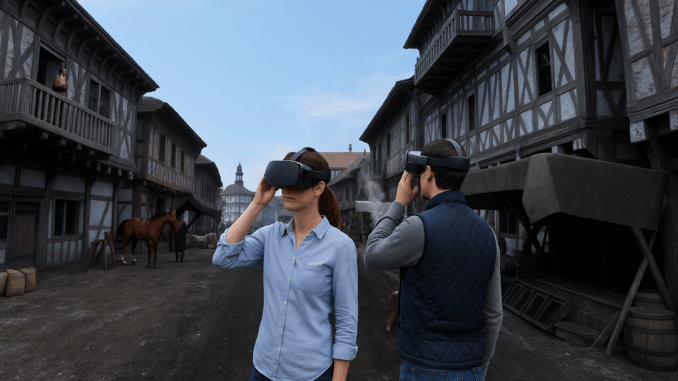
B2. Zeitsprung – MR-Store
The MR-Store is a digital experience space in which content is permanently accessible. Its MR scenes let visitors experience cities in the past, present and future in 3D. Virtual, digital exhibits are thus one way of revitalizing downtown areas.
Examples:
- Virtual exhibits in 3D
- 3D avatars that guide visitors through the scenes and appear in augmented reality
- Historical objects to explore
- Time travel as a digital collection
- Extension of real exhibitions
Can be used as a complement to museums, an educational platform and a digital extension of exhibitions.
More: Zeitsprung solution for revitalizing downtown areas and MR-Store: innovations.
Modular and expandable
All ZEITSPRUNG offers can be combined modularly, expanded at any time, are technically future-proof and suitable for web, app, AR, VR and MR. A project can start with a simple 2D offer and grow step by step into a complex mixed reality time travel experience.
ZEITSPRUNG is therefore a system for digital time travel: easy to get started with and open to expansion.
Related pages: Virtual time travel · Virtual time travel with mixed reality · Zeitsprung: revitalizing downtown areas · MR-Store: innovations
Frequently asked questions
What is ZEITSPRUNG?
A modular system by EXCIT3D for digital time travel: from a 2D entry on the smartphone and augmented reality to mixed reality tours and the MR-Store.
What is the difference between AR and MR?
With augmented reality, digital content is overlaid onto the surroundings via a smartphone, tablet or smart glasses, and the physical surroundings remain visible. With mixed reality, the content is firmly anchored in the surroundings and real and virtual objects can interact; this requires headsets with environment sensors.
Can several people take part at the same time?
Yes. With multi-user functions, several people wearing MR headsets experience the same scene in sync or look together at an animated 3D model placed in the room, each from their own perspective.
Plan your time travel
Tell us which place and which story you would like to show. We will suggest whether a 2D entry, an AR route or a mixed reality tour is the right fit.
EXCIT3D GmbH · Mankhauser Str. 1 · 42699 Solingen, Germany · info@excit3d.de